Textiles & Costume
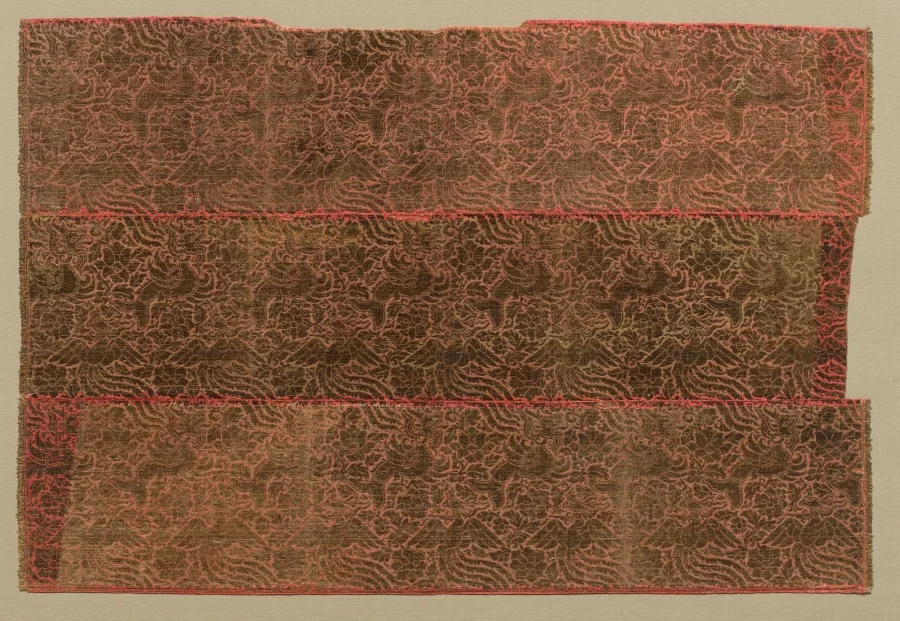
Makaras, Phoenixes and Flowers
TextileMetalwork
Details
- Author / creator
- Central Asia or Daidu, 13th century
- Object type
- Textile
- Date or period
- 1200s
- Dimensions summary
- Overall: 51.3 × 75.6 cm
- Place of origin
- Central Asia or Daidu
- Acquisition method
- Purchase
- Credit line
- Purchased with the National Heritage Memorial Fund, 1991
- Fibres
- Silk
- Metal thread
- Structure
- Lampas
About this object
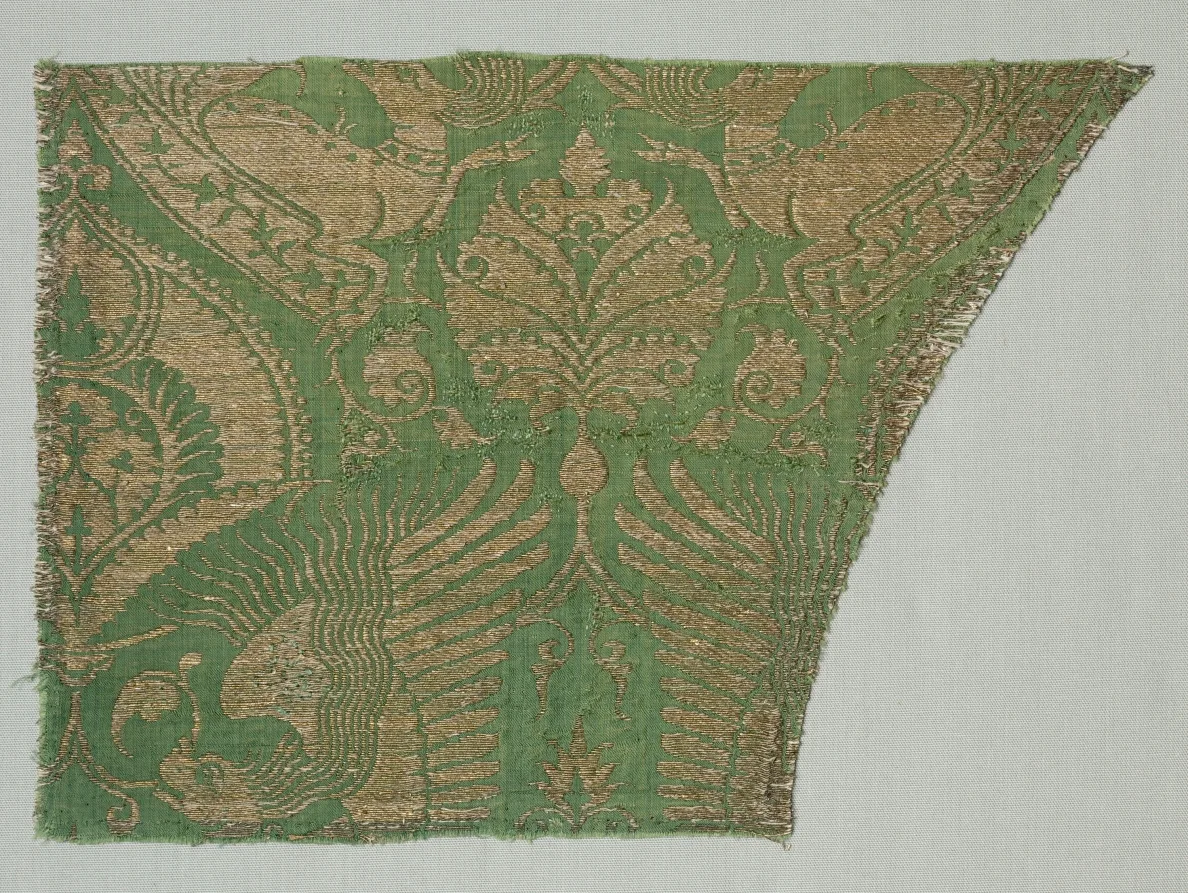
Central Asian designers drew from a wide variety of motifs, both imaginary and real. In this silk, rows of soaring phoenixes alternate with rows of makaras. Combining a fish body and tail, wings, and a dragon's head, the makara originated in India as a water creature. With the spread of Buddhism, the motif migrated into the art of Central Asia and, from there, into the art of northern China. In Italy, exotic Central Asian patterns such as this inspired flights of imagination. One such example (seen in the photograph below) shows a creature, strikingly similar to the makara, spewing forth a dragon while a dog walks up its back.
Materials and technique
Lampas, silk and gold thread