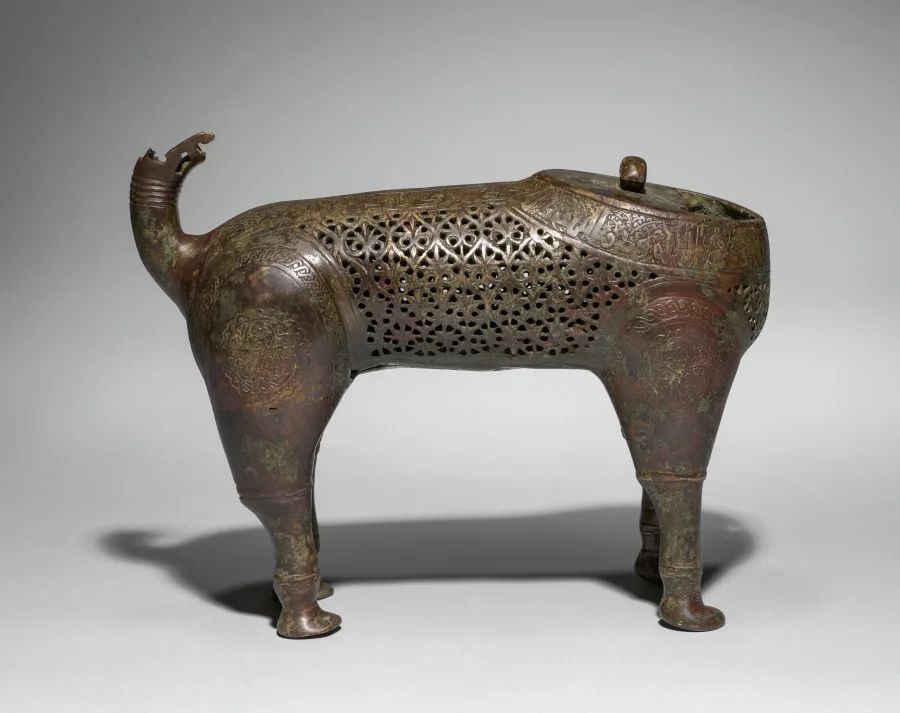
Feline Incense Burner
Details
- Author / creator
- Iran, Khurasan, Seljuq period of Iran (1037–1194)
- Object type
- Metalwork
- Date or period
- 1150–1200
- Dimensions summary
- Overall: 35.5 × 11 cm; Head: 17.8 × 9.5 × 12.5 cm
- Maker or workshop
- Iran, Khurasan, Seljuq period of Iran (1037–1194)
- Period / style
- Seljuq period
- Place of origin
- Iran
- Acquisition method
- Purchase
- Credit line
- Purchased with the Founder's Endowment, 1948
About this object
In Iran during the 1000s and 1100s, vessels in the shape of animals gained popularity, especially as incense burners. Felines were favored in Persian art and this piece may represent a caracal, a type of lynx. The head of the creature was cast separately and is removable to fill its body with hot coals and incense. Qur’anic verses on the neck and spine remind worshippers to set work aside, attend prayer, and then disperse to seek God’s bounty. The diffusion of perfumed smoke through the burner’s pierced palmette design may have served as a sensorial reminder of this teaching.
Materials and technique
Copper alloy, cast, engraved, chased, and pierced
Signature and marks
Qur'an sura al-jum'ah (The Friday Congregation) 62:9-10 (on neck and spine) (“The inscription reads in part: "O believers, when proclamation is made for prayer on the Day of Congregation, hasten to God's remembrance and leave trafficking aside... then, when the prayer is finished, disperse through the land and seek God's bounty, and remember God frequently that you may prosper."”)