Archaeology & Antiquities
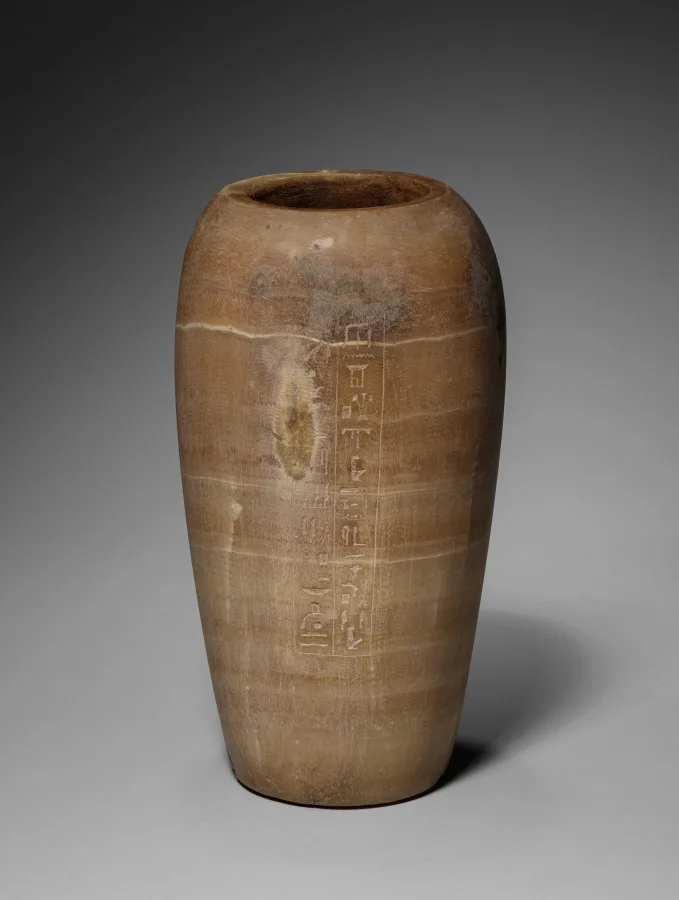
Canopic Jar with Baboon's Head
Permanent ExhibitionFunerary ObjectVessel
Details
- Author / creator
- Egypt, Late period (715–332 BCE), Dynasty 26
- Object type
- Archaeology
- Date or period
- 664–525 BCE
- Dimensions summary
- Diameter: 18.2 cm; Diameter of mouth: 9.6 cm; Overall: 40.8 cm
- Site or findspot
- Thebes (Luxor), Egypt
- Cultural period
- Ancient
- Place of origin
- Egypt
- Acquisition method
- Purchase
- Credit line
- Purchased with the Hartley Bequest Fund, 1921
- Image rights
- Public domain (CC0)
About this object
In the process of mummification, the liver, lungs, stomach, and intestines were removed, separately embalmed, and stored in specialized jars known as canopic jars (after a sailor in Greek mythology, who died at the town of Canopus in the Nile Delta and was worshipped there in the form of a human-headed jar). Each organ was identified with one of four funerary deities collectively known as the Sons of Horus: the liver with Imsety (man's head), the lungs with Hapy (baboon's head), the stomach with Duamutef (jackal's head), and the intestines with Qebehsenuef (falcon's head). It was their duty to protect the deceased and restore to him his body parts in the hereafter.
Materials and technique
Travertine